

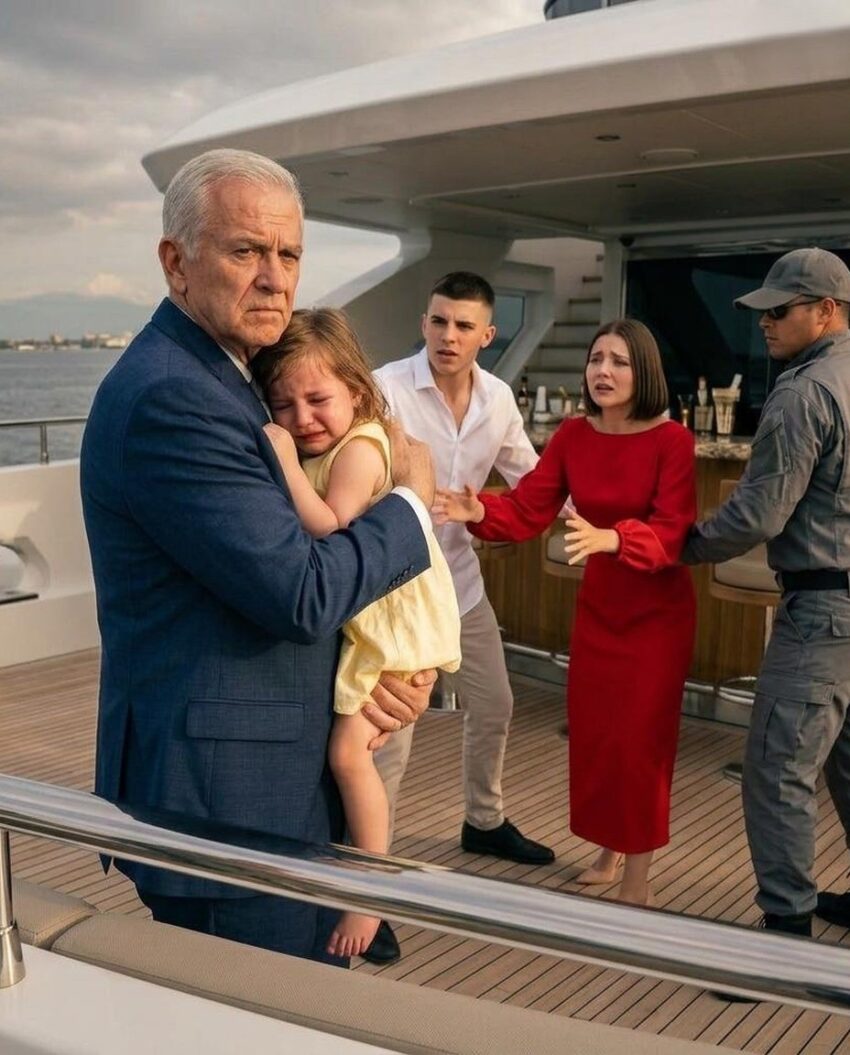
Shocking Discovery at 2 AM How My Granddaughter Ended Up Alone While Her Parents Enjoyed a Cruise
The silence of my home at 2:00 A.M. was usually a sanctuary, a time for deep sleep and the quiet peace that comes with retirement. But that night, the sharp, rhythmic trill of my phone shattered the stillness. In the darkness, the blue light of the screen felt blinding. I didn’t recognize the number, but a grandmother’s intuition is a physical weight in the chest—a sudden, heavy sinking that tells you the world has shifted on its axis before you even pick up the receiver. My son, Daniel, was supposed to be in the middle of the Caribbean. He, his wife, and their children had embarked on a highly anticipated luxury cruise just forty-eight hours prior. I expected silence from them, or perhaps a stray photo of a sunset over the turquoise water. I did not expect a call from a local emergency room.
The voice on the other end was clinical and calm, which only heightened my panic. It was a triage nurse. She informed me that my seven-year-old granddaughter, Olivia, had been admitted with a dangerously high fever and severe dehydration. My breath caught. I asked if Daniel was there with her, assuming perhaps they had missed their flight or the ship hadn’t sailed. The nurse’s hesitation lasted only a second, but it felt like an eternity. She told me Olivia had been found by a hotel security guard near a shuttle stop, clutching a small backpack, shivering despite the humid night air. She was alone.
The drive to the hospital was a blur of streetlights and whispered prayers. My mind raced through the last few days. Daniel had sent a flurry of photos from the terminal—smiling faces, luggage stacked high, the massive white hull of the ship looming in the background. I realized with a sickening jolt that I hadn’t actually seen Olivia in those photos. I had seen her older brother, her younger sister, and her parents, but I had subconsciously assumed she was the one behind the camera or simply out of the frame in the chaos of boarding. The realization that my son had boarded a ship and sailed into the horizon while his middle child was left on a sidewalk was a betrayal so profound I couldn’t even find the words to scream.
When I burst into the pediatric ward, the sterile smell of antiseptic and the low hum of monitors did little to soothe my nerves. I found her in Room 412. She looked impossibly small in the large hospital bed, her skin pale and waxy, an IV line taped to her fragile wrist. When she saw me, her eyes filled with tears, but she was too weak to do more than reach out a trembling hand. I sat beside her, stroking her hair, and listened as the doctor explained the severity of the situation. Olivia had contracted a virulent flu-like bug the day of the departure. She had been lethargic and vomiting, but according to what she told the nurses, her parents were frustrated by the “bad timing.” They had spent thousands on this trip, and they didn’t want to miss the departure.
The story that emerged was a nightmare of negligence disguised as a “misunderstanding.” In their rush to manage three children and a mountain of luggage, and in their irritation with Olivia’s illness, a series of catastrophic decisions were made. They had allegedly told Olivia to wait by the shuttle stop with a family friend who was supposed to be meeting them there to take her back to my house. But that friend never existed. It was a fabrication, a way to move the “problem” out of sight so they could continue their vacation without the burden of a sick child. They had left her with her backpack and a bottle of water, telling her someone would be there in five minutes. No one came. She had sat there for hours, her fever climbing, until she eventually collapsed.
As the sun began to rise over the city, the hospital room became a hub of legal and social activity. Because Olivia had been abandoned, the authorities were automatically triggered. A social worker named Sarah sat with me, her face a mask of professional concern. She explained that they had already contacted the cruise line. The ship was currently at sea, but the captain had been notified. The “cheerful” vacation my son was enjoying was about to come to a screeching, legal halt.
I felt a cocktail of emotions: a fierce, protective rage toward my own son and a soul-crushing sadness for Olivia. How could a parent look at a suffering child and see an inconvenience instead of a priority? I looked at the photos Daniel had posted on social media just hours ago—cocktails by the pool, the bright blue ocean. He looked carefree. It was a jarring contrast to the girl lying in front of me, who was now being monitored for potential kidney issues due to the level of dehydration she had reached while waiting for a “help” that was never sent.
By the second day, the fever began to break. Olivia started to talk more, though her voice was a raspy whisper. She asked if she had done something wrong. She thought she was being punished for being sick and ruining the cruise. Breaking that perception was the hardest thing I have ever had to do. I had to explain that none of this was her fault, that she was precious, and that she would never be left behind again. I made a silent vow that as long as I had breath in my lungs, she would have a home where her needs were never considered secondary to a luxury.
The confrontation with Daniel and his wife occurred three days later. They had been forced to disembark at the first port of call and fly back under the shadow of a police investigation. When they walked into the hospital, they tried to play it off as a “he-said-she-said” confusion between them regarding who was staying behind with her. But the evidence was cold and clear. They had both boarded that ship. They had both scanned their cards. They had both left a sick seven-year-old on a bench in the middle of the night.
The legal fallout was swift. Child Protective Services opened a formal case, and for the time being, Olivia was placed in my legal custody. The transition wasn’t just about paperwork; it was about rebuilding a shattered spirit. We moved her things into my guest room, turning it into a sanctuary of soft blankets, books, and the absolute certainty of presence.
This ordeal changed the fabric of our family forever. It severed the blind trust I had in my son and forced me to step into a role I hadn’t expected to play at this stage of my life. But as I watch Olivia laugh again, her color returning and her eyes losing that haunted look of abandonment, I know that the 2 A.M. phone call was a turning point of mercy. It saved her life, and it gave me the chance to prove to her that she is worth everything. In the end, the cruise was just a ship on the water, but Olivia’s safety was the only thing that ever truly mattered. The storm has passed, and in the quiet that followed, we found a new way to be a family—one built on accountability, fierce protection, and the promise that no one gets left behind.



0 commentaires:
Enregistrer un commentaire