

ADVERTISEMENT
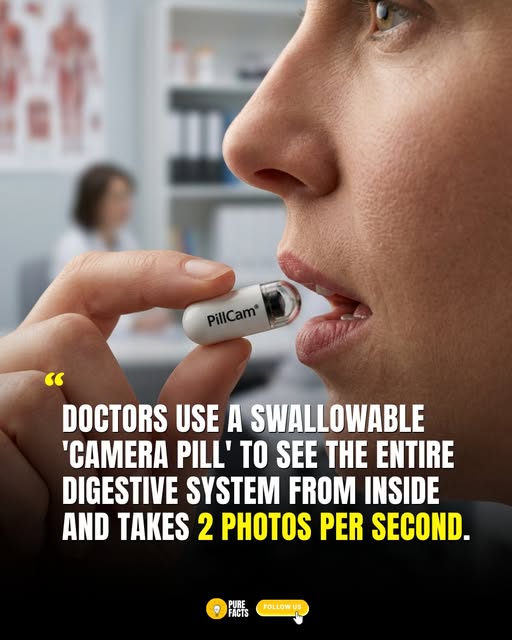
DOCTORS USE A SWALLOWABLE ‘CAMERA PILL’ TO SEE THE ENTIRE DIGESTIVE SYSTEM FROM INSIDE AND TAKES 2 PHOTOS PER SECOND
Modern medicine has developed an extraordinary tool that allows doctors to look deep inside the human digestive system without surgery, long tubes, or painful procedures. This technology is known as capsule endoscopy, often called the “camera pill.” Small enough to swallow like a regular vitamin, this miniature device has transformed the way doctors detect hidden digestive diseases and internal problems that were once difficult to diagnose.
What Is a Capsule Endoscopy?
A capsule endoscopy is a tiny disposable medical device about the size of a large vitamin capsule. Inside this small pill are several advanced components packed into a compact space, including:
- A miniature high-resolution camera
- Tiny LED lights for illumination
- A battery
- A wireless transmitter
- Specialized image sensors
Once swallowed with water, the capsule begins a fascinating journey through the digestive tract. As it travels naturally through the body, it continuously captures images — often around two pictures every second — creating thousands of detailed photographs of the digestive system.
These images are wirelessly transmitted to a recording device worn by the patient, usually attached to a belt or small vest. After the procedure, doctors analyze the recorded footage frame by frame to search for abnormalities inside the digestive tract.
How the Camera Pill Travels Through the Body
Unlike traditional endoscopy procedures that require flexible tubes inserted through the mouth or rectum, the camera pill moves naturally using the body’s own digestive motions.
The capsule typically travels through:
- The esophagus
- The stomach
- The small intestine
- Parts of the large intestine (colon)
One of the biggest advantages of capsule endoscopy is its ability to examine the small intestine, an area that is notoriously difficult to reach with standard endoscopy tools. The small intestine is several meters long and contains many twists and folds, making traditional examination challenging.
As the capsule moves through these areas, it captures continuous images of the intestinal lining, helping doctors detect hidden disease, inflammation, bleeding, or structural abnormalities.
ADVERTISEMENT
DOCTORS USE A SWALLOWABLE ‘CAMERA PILL’ TO SEE THE ENTIRE DIGESTIVE SYSTEM FROM INSIDE AND TAKES 2 PHOTOS PER SECOND
What Conditions Can the Camera Pill Detect?
Capsule endoscopy has become an important diagnostic tool for many digestive disorders and unexplained symptoms. Doctors commonly use it to investigate:
Internal Bleeding
One of the most common reasons for capsule endoscopy is finding the source of unexplained gastrointestinal bleeding. Tiny bleeding vessels or ulcers hidden deep in the small intestine can often be identified with the camera pill.
Crohn’s Disease
Crohn’s disease causes inflammation in the digestive tract, especially in the small intestine. Capsule endoscopy can reveal ulcers, swelling, and irritated tissue that may not appear on standard imaging tests.
Polyps and Tumors
The camera pill can help detect abnormal growths, including benign polyps and certain intestinal tumors, especially in hard-to-reach areas.
Ulcers and Inflammation
Doctors can identify areas of irritation, inflammation, infection, or ulceration that may explain chronic abdominal pain or digestive symptoms.
Celiac Disease
In some cases, capsule endoscopy helps evaluate damage caused by gluten-related intestinal disease.
Unexplained Digestive Symptoms
The procedure may also be used for patients experiencing:
- Chronic abdominal pain
- Persistent diarrhea
- Unexplained anemia
- Sudden weight loss
- Suspected intestinal damage
What Happens Before the Procedure?
To obtain clear images, patients are usually asked to prepare beforehand. Preparation instructions may include:
- Avoiding food for several hours before swallowing the capsule
- Drinking only clear liquids
- Sometimes taking bowel-cleansing medication
A clean digestive tract allows the camera to capture sharper, more detailed images.
Patients are typically fitted with a sensor belt or recording device before swallowing the capsule. After that, the process is remarkably simple.
What Is the Experience Like?
Most people describe capsule endoscopy as painless and convenient.
After swallowing the capsule:
- Patients can usually walk around normally
- Many continue regular daily activities
- No sedation is required
- No hospital stay is necessary
The capsule quietly travels through the digestive tract for several hours while automatically recording thousands of images.
Once the battery life ends, the recording device is returned to the medical team for analysis. The disposable capsule then exits the body naturally during normal bowel movements, often without the patient even noticing.
Advantages of Capsule Endoscopy
This technology offers several important benefits compared to traditional procedures.
Non-Invasive
No surgical incisions or long internal tubes are required.
No Sedation Needed
Patients remain awake and alert throughout the entire process.
Better Access to the Small Intestine
The camera pill can reach areas that conventional endoscopes often cannot.
Comfortable for Patients
Most patients experience little to no discomfort.
Detailed Internal Imaging
Modern capsules produce high-quality images with improved lighting and automatic exposure adjustment for better visibility.
Are There Any Risks?
Capsule endoscopy is generally considered very safe, but like all medical procedures, it carries some small risks.
In rare cases, the capsule may become stuck inside a narrowed section of the intestine, particularly in patients with:
- Severe Crohn’s disease
- Scar tissue
- Tumors
- Intestinal narrowing
Doctors sometimes perform additional imaging beforehand if blockage is suspected.
The Future of Smart Medical Capsules
Researchers continue developing even more advanced versions of the camera pill. Future technologies may include:
- Higher-definition imaging
- Artificial intelligence for faster diagnosis
- Capsules capable of taking tissue samples
- Drug-delivery capsules
- Tiny robotic capsules with controlled movement
Some experimental designs are even exploring capsules that may one day perform miniature medical treatments directly inside the digestive tract.
A Revolution in Digestive Medicine
Capsule endoscopy represents one of the most impressive examples of how miniature technology is changing healthcare. What once required uncomfortable invasive procedures can now be done with a tiny swallowable camera that journeys naturally through the body.
By providing doctors with a detailed internal view of the digestive system — especially hard-to-reach areas of the small intestine — the camera pill has helped improve the diagnosis of bleeding disorders, inflammatory diseases, tumors, and many other gastrointestinal conditions.
For many patients, this tiny capsule offers a safer, easier, and far more comfortable way to uncover hidden digestive problems and guide life-changing treatment decisions.



0 commentaires:
Enregistrer un commentaire